












How to spot fake Tiffany jewellery
Learn how to tell if Tiffany jewelry is real or not. As one of the world’s biggest jewellery brands, there is a lot of counterfeit Tiffany jewellery.


Learn how to tell if Tiffany jewelry is real or not. As one of the world’s biggest jewellery brands, there is a lot of counterfeit Tiffany jewellery.
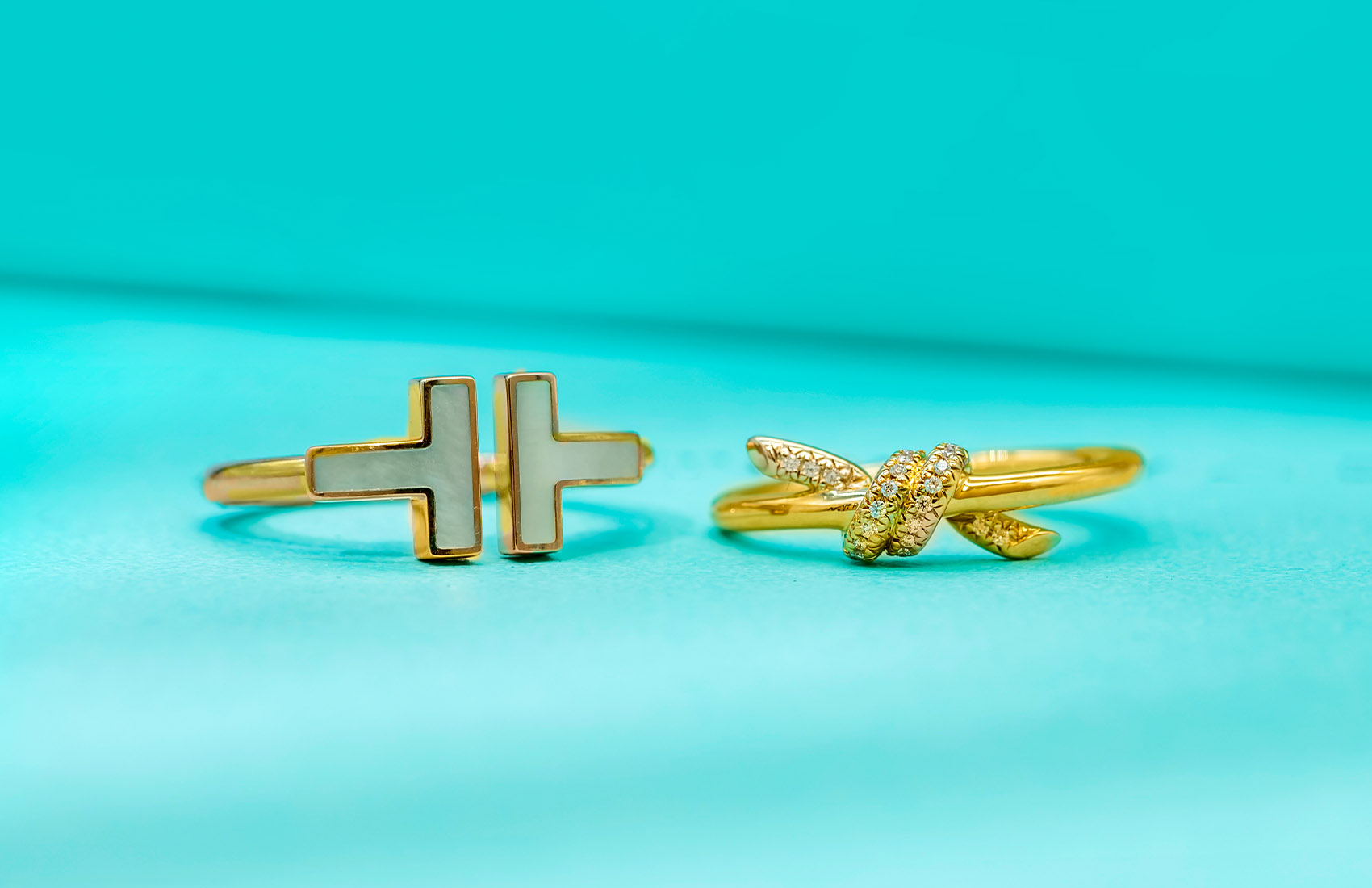

Fake Tiffany jewellery can look convincing, particularly in online photographs. While there are useful checks you can make yourself to spot a fake Tiffany bracelet, necklace, ring or pair of earrings, no single hallmark, Tiffany packaging or certificate proves that a piece is genuine.
The safest approach is to assess the whole item: its design, materials, construction, engravings, provenance, and the seller. Compare it with a confirmed genuine example of the same collection and period wherever possible. Modern counterfeit Tiffany jewelry can reproduce individual details well. It is the combination of small inconsistencies that often reveals a fake Tiffany and Co piece.
Before inspecting a hallmark or the box, identify the exact design. Is it a Return to Tiffany heart tag, Tiffany 1837 ring, Tiffany T bracelet, HardWear link necklace or an Elsa Peretti design? Then compare it with a confirmed genuine example from the same collection.
Look at the overall proportions, chain style, clasp, motif, metal colour and the placement of any stones. A piece may have a convincing Tiffany & Co. stamp but still be the wrong shape, size or construction for the design it claims to be. This is particularly important with vintage Tiffany jewellery. Vintage Tiffany & Co. hallmarks, clasps and branding can vary by era, so a modern product photo is not always the right comparison for an older piece.
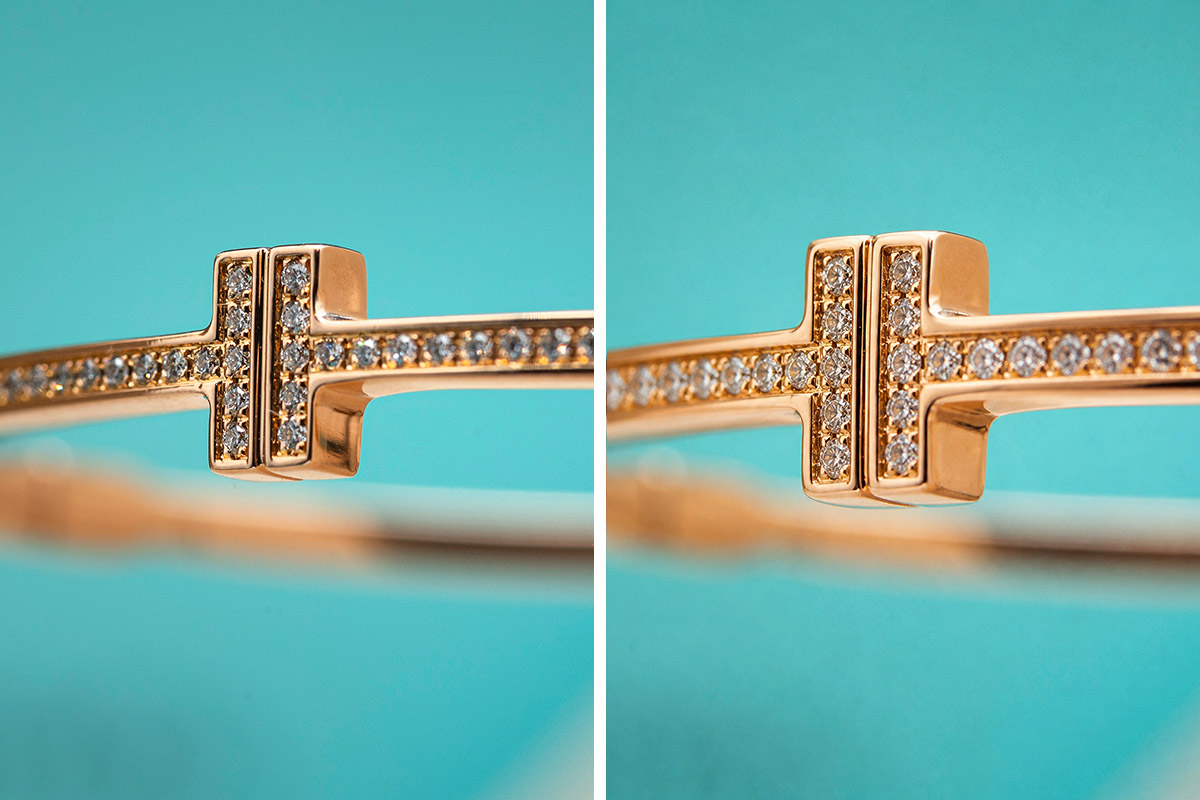
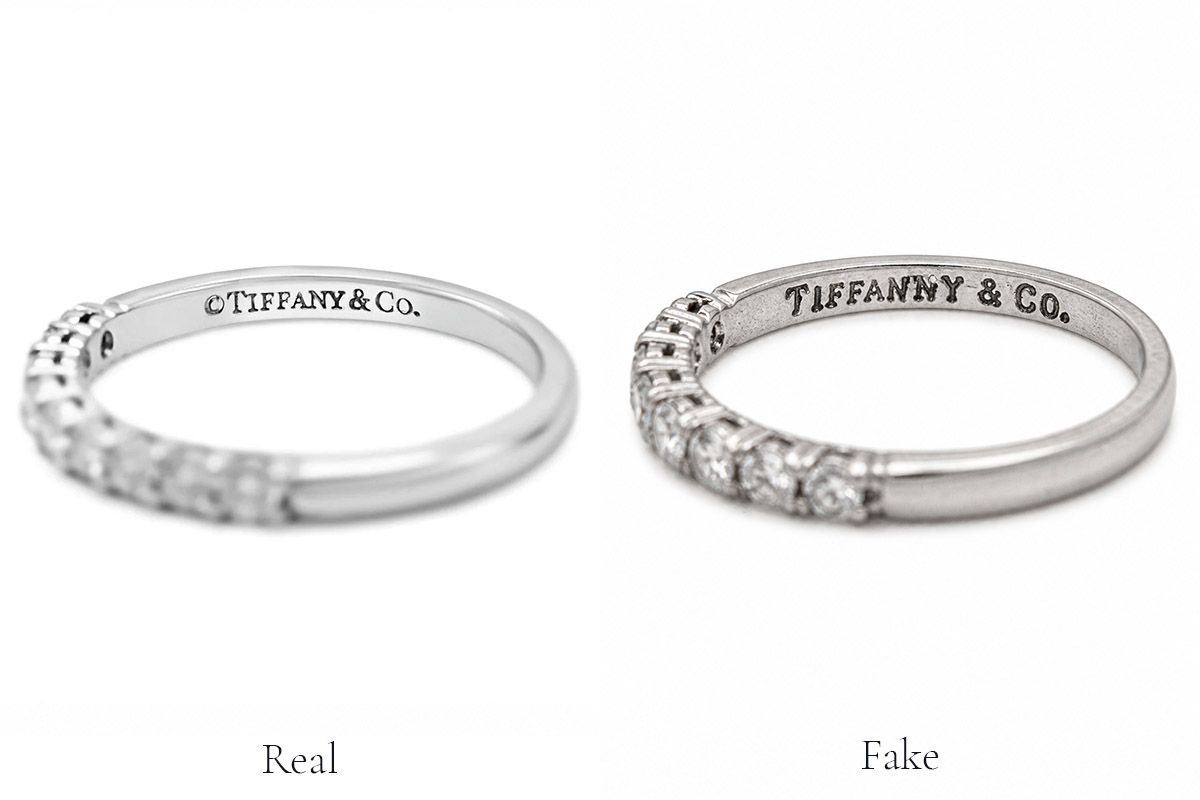
The engraving is one of the most useful places to start when comparing fake Tiffany and Co jewellery with real Tiffany. Look closely at the lettering, spacing, alignment and depth of the design, hallmark, or serial number. Genuine Tiffany & Co. pieces are made with care and precision, so the engraving will look sharp and consistent rather than faint, uneven or roughly placed.
Some common fake Tiffany tells we see in the engravings are spelling mistakes, letters too thick, uneven spacing between words, and poor engraving, such as wobbly letters. Real Tiffany jewellery will have clear, sharp, perfect engravings.
This is especially useful with Return to Tiffany tags and Tiffany 1837 jewellery, where the wording is a key part of the design. However, the presence of a sharp engraving does not prove that a piece is genuine. Counterfeiters can copy stamps, and marks can also look different on older, repaired or heavily worn jewellery.
Genuine Tiffany jewellery is made from precious metals and carefully finished. Each model of jewellery will have the same weight. For example every yellow gold Tiffany HardWear double link necklace will weigh the same. But weight alone is never proof; a counterfeit can be made heavier to imitate the feel of a genuine piece.
Instead, inspect the construction. Look for secure links, clean joins, an even finish, well-made clasps and properly set stones. Look for discolouration or base metal showing through in areas of wear, real solid gold jewellery will not have discolouration, whereas fake gold plated Tiffany jewellery might.
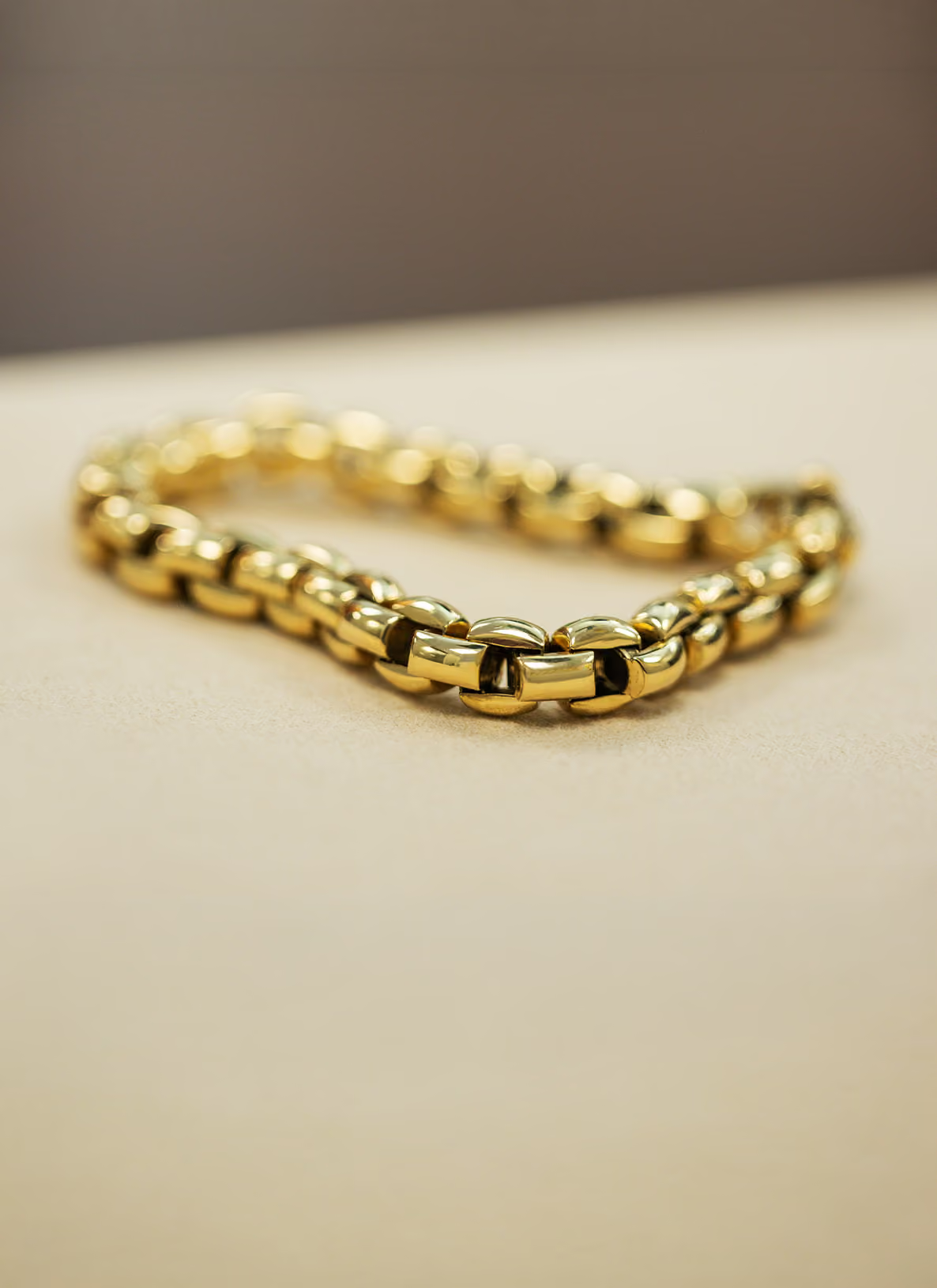
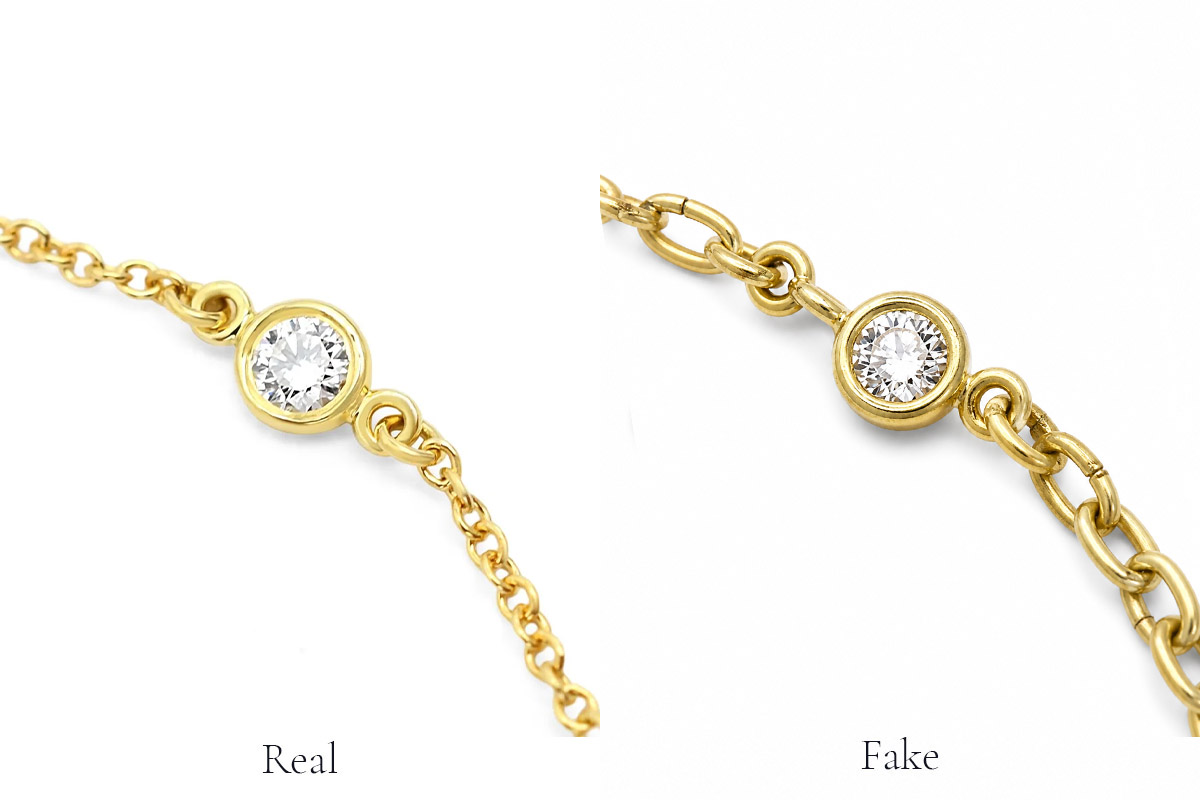
One of the best ways to tell fake Tiffany vs real is to inspect the links. Tiffany links are soldered, continuous links with no ‘join’ line in the link. True of linked Tiffany bracelets too, Tiffany soldering is so expert that the link looks to be seamless. A fake chain will show linking marks.
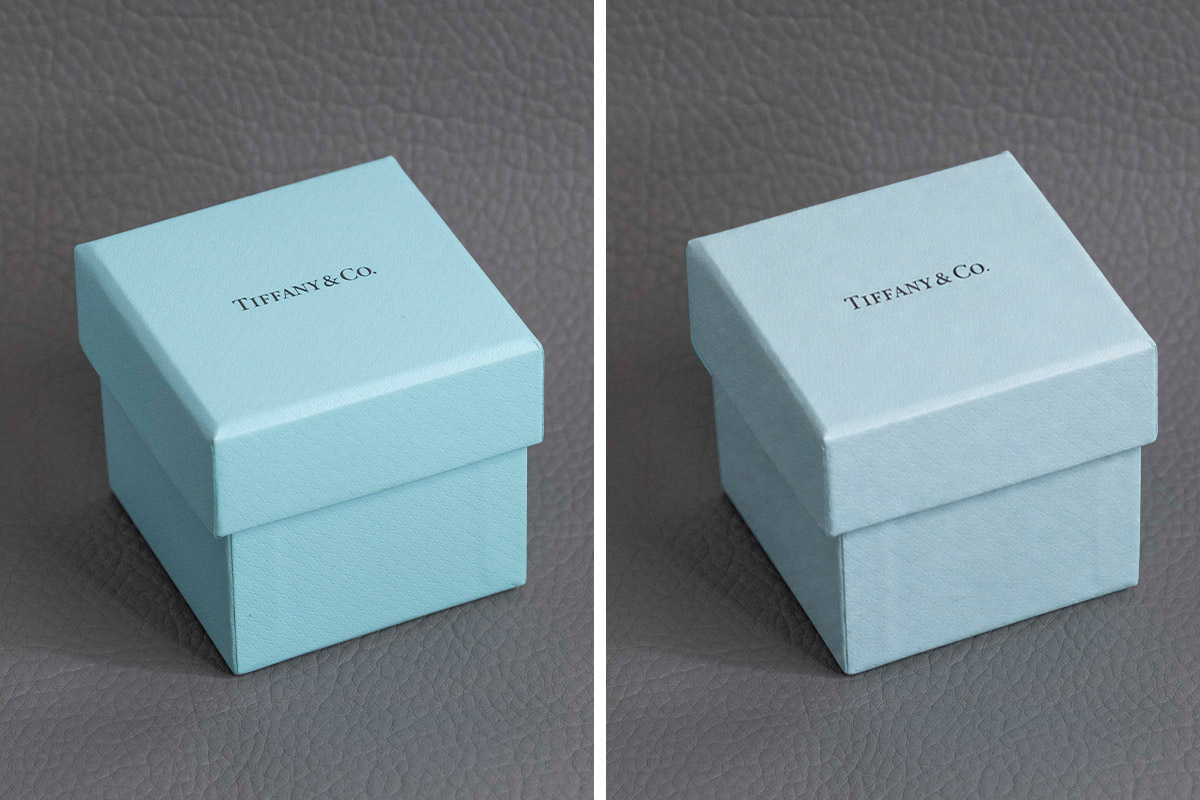
The Tiffany Blue Box is one of the brand’s most recognisable symbols. The exact colour is known as ‘1837 Blue’ or ‘Pantone 1837’.
An authentic Tiffany box should look carefully made, with crisp edges, an even blue colour, and sharp printing. It should be the right size for the item and feel considered rather than flimsy or poorly finished. However, a pre-owned box may show age or wear, so a small imperfection does not automatically mean it is a fake Tiffany box. Depending on the piece and its age, original packaging may include a fitted Tiffany Blue Box, matching bag, ribbon, pouch or protective insert, and care or purchase paperwork. These details should make sense together and match the item.
However, packaging is supporting evidence, not proof. Genuine Tiffany blue boxes can be sold separately, reused with another piece or paired with a counterfeit item to help make the item appear authentic.
Where the item was bought is very important. If you want to check Tiffany you already own before selling, look for paperwork of where it was bought such as a receipt. A purchase from an official Tiffany boutique or trusted Tiffany reseller website provides stronger provenance than an unverified private sale. A trusted pre-owned reseller will explain where the piece came from, describe its condition and have a clear returns policy.
If you are looking to buy preloved Tiffany jewellery and are unsure about its history, ask the seller for close-up images of the piece, its hallmarks and any original receipt or paperwork. Be cautious if they cannot explain where it came from, do not offer returns or pressure you to buy quickly. Buying pre-owned Tiffany jewelry from a trusted Tiffany reseller like us is the safest option. We guarantee the authenticity of every single piece of second hand Tiffany jewellery we sell.
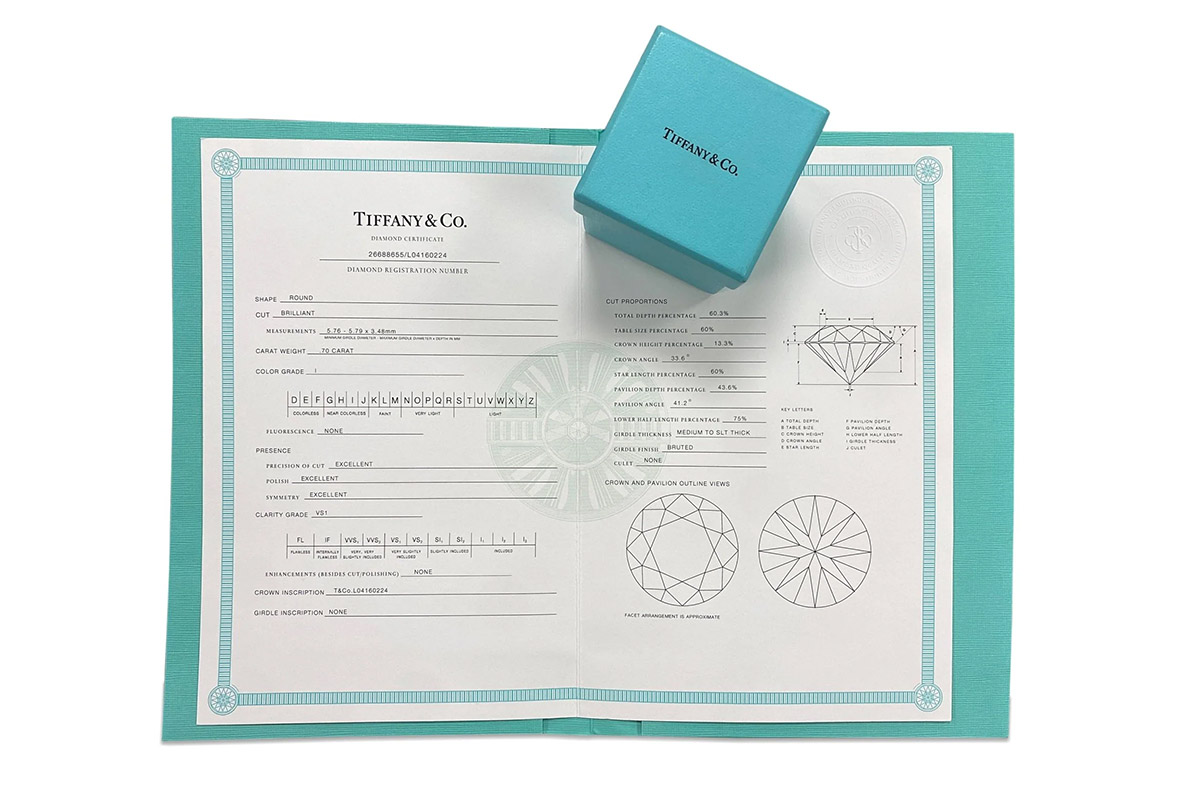
Price can be another useful indication when checking if Tiffany jewellery is real. Compare the item with genuine examples from trusted Tiffany resellers, making sure the design, metal, size, condition and diamonds are genuinely comparable.
For example, if a trusted Tiffany reseller is selling a Tiffany HardWear link ring with diamonds for £7,500, but you find the same ring on eBay for £5,000 in apparently identical condition, question why there is such a large difference. It may be a Tiffany dupe, incorrectly described or have an issue that has not been disclosed.
A lower price does not prove that Tiffany jewellery is fake. The item may be worn, altered, missing its original box or paperwork, or the seller may simply want a quick sale, making Tiffany more affordable. However, a Tiffany price far below genuine examples is a common warning sign and should make you look more closely at the item’s design, hallmarks, condition and provenance.
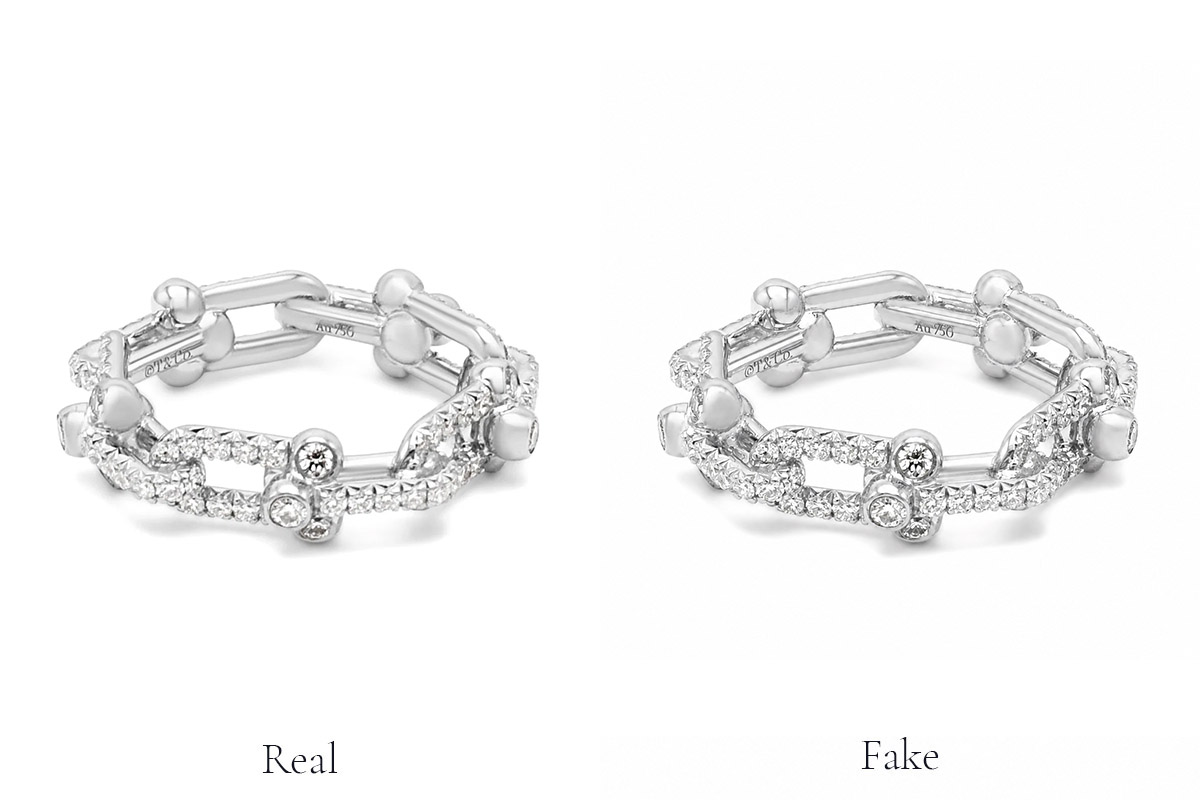
A Tiffany stamp, 925 hallmark, Tiffany Blue Box or correct weight can all be positive signs, but none proves that a piece is genuine on its own. Counterfeiters can copy engravings, use convincing packaging and make jewellery from real precious metals. Equally, a genuine Tiffany piece may have a replacement clasp, signs of wear or missing paperwork. This does not automatically make it dupe Tiffany, but it may affect its condition and value.
The best way to check Tiffany jewellery is to look at all the details together: the design, engraving, hallmarks, construction, packaging, provenance and price. If several details do not match, it is worth getting the piece checked by an expert.
With over 250 years' experience as a luxury pawnbroker and jeweller, we examine and authenticate Tiffany jewellery every day. Some of which turn out to be counterfeit Tiffany. Before a customer sells us Tiffany & Co. or we offer a loan against Tiffany jewellery, we must confirm the piece is genuine.
One common issue we see is a piece that looks right at first glance but does not match the correct Tiffany design. The engraving may be convincing, but the clasp is wrong for that collection, the links are the wrong shape, or the metal mark does not match the material being sold.
In one case, a customer brought us a Tiffany solitaire diamond ring to sell. They tried to rush the sale and expected a higher price than we would normally expect for that type of piece. They were also reluctant to share details of the ring’s history and where it had been bought. On closer inspection, the Tiffany diamond certificate check did not match the stone in the ring, and the hallmark showed poor craftsmanship. These details confirmed that the piece needed further investigation and turned out to be a fake Tiffany ring.
Modern counterfeits can copy several details well and look quite convincing. But no single detail alone can prove that a Tiffany bracelet, necklace, ring or pair of earrings is genuine. So, the safest way to buy pre-owned Tiffany jewellery is through a trusted reseller that can explain the item’s history and stand behind its authentication process.
Quick fake Tiffany jewellery checklist
{{resource-cta="/dev/components"}}
No. A 925 stamp indicates sterling silver, not the maker. It should be assessed alongside the Tiffany engraving, design, construction, condition and provenance.
No. The box can be useful supporting evidence, but it can be bought separately, reused or paired with a different item. Always assess the jewellery itself.
Tiffany states that it does not currently offer an authentication programme. For a pre-owned piece, compare it with a confirmed genuine example and seek specialist advice where needed.
It is possible for a counterfeit piece to be made from genuine precious metal. Metal testing can be helpful, but it cannot prove that an item was made by Tiffany & Co.
Check the design, engraving, hallmarks, construction and provenance against examples from the correct period. Vintage Tiffany jewellery can vary from modern pieces, so compare like with like and seek an expert opinion for higher-value items.
Not every new Tiffany jewellery purchase comes with a certificate of authenticity. Tiffany issues a diamond certificate for diamond and engagement rings, confirming the diamond’s details. Most Tiffany jewellery, such as tiffany bracelets and necklaces, will not have an individual certificate.
Read our related articles on fake vs real Cartier Love Jewellery, fake Van Cleef Jewellery and fake Bvlgari Jewellery.

Cartier jewellery holds its value well, with vintage Cartier jewellery often increasing in value. Visit a Cartier specialist like us to get your Cartier jewellery valued.

Compare the different ways to sell jewellery and find out which route pays the most, sells the fastest and suits your piece.
Does jewellery have high resale value? Our 2026 report analyses 2,000+ real sales across Cartier, Van Cleef & Arpels, Bulgari, Chopard, Tiffany & Co., and Boodles.
Learn how to tell if Tiffany jewelry is real or not. As one of the world’s biggest jewellery brands, there is a lot of counterfeit Tiffany jewellery.
Learn how jewellery valuations work, why prices vary, what influences jewellery appraisals, and the differences between resale, insurance, and loan valuations.
Investing in jewellery is increasingly popular. Find out some of the best jewellery to invest in, such as Tiffany, Cartier and Van Cleef investment jewellery.
Discover how the Cartier serial number check works. How to find your Cartier serial number, what it means and how experts use it to verify Cartier jewellery.
Discover how to clean Tiffany jewellery at home. Read our Tiffany jewellery cleaning tips, including how to clean Tiffany silver safely.